The AI Cloud Surge
How Generative AI Workloads Rewrote the Architecture and Economics of the Big Three Hyper- scalers
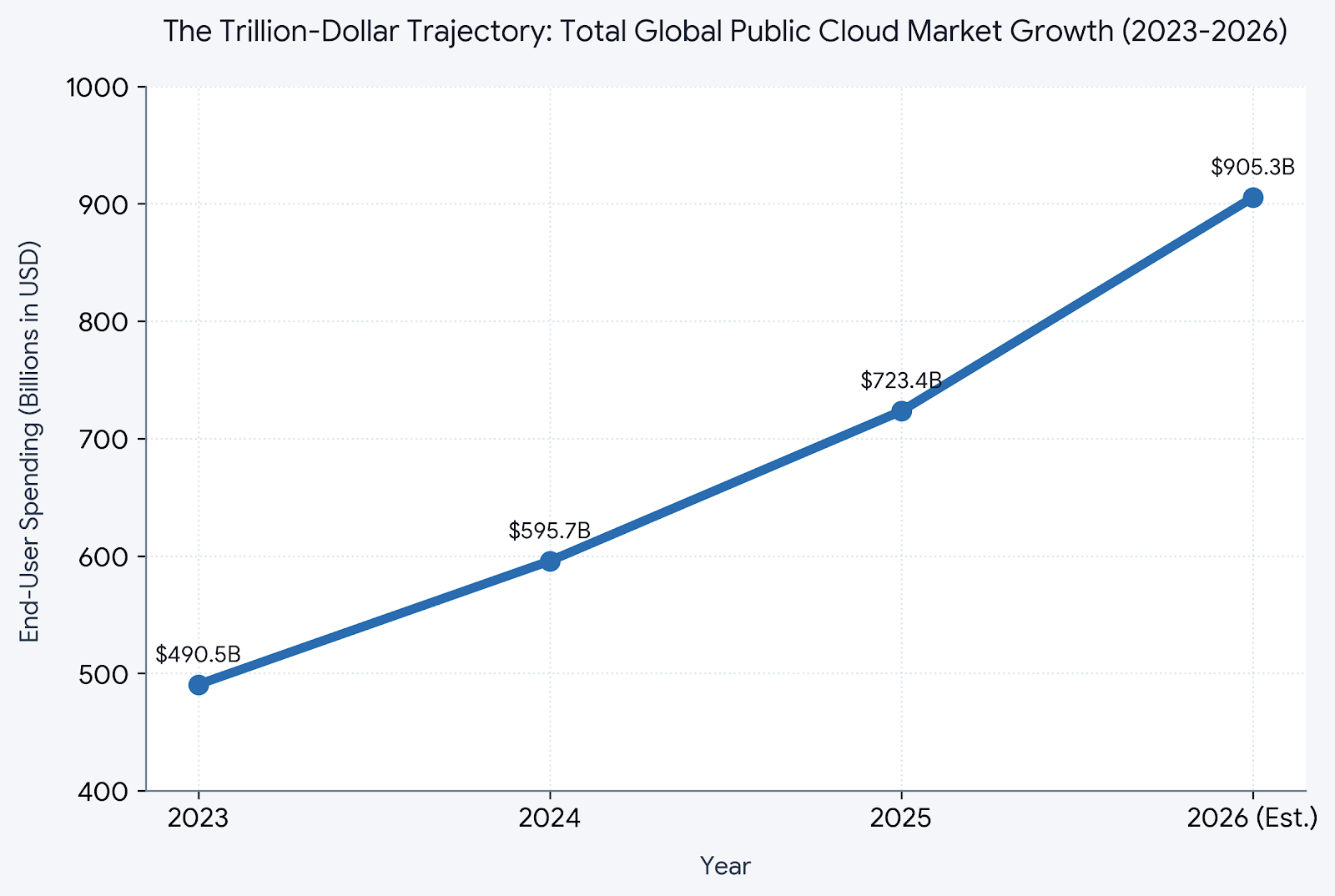
Over the past three years, the narrative surrounding cloud computing has undergone a structural transformation. What began as a tool for cost-efficiency, infrastructure elasticity, and standard enterprise application hosting has rapidly shifted into a massive, centralized processing machine for Artificial Intelligence.
In the early phases of the generative AI boom, cloud usage was characterized by cyclical, massive bursts of compute dedicated to model training
2. High-Dimensional Storage and Vector Databases
AI models operate on context and mathematical representations called embeddings
3. Real-Time Data Processing Pipelines
AI is fundamentally data-hungry
4. Multi-Cloud Networking and Data Egress
Due to persistent silicon shortages and specialized regional hardware availability over the past three years, no single cloud giant could fulfill the totality of enterprise computing demands
The Hyper-Scaler Windfall: How the Big Three Benefited
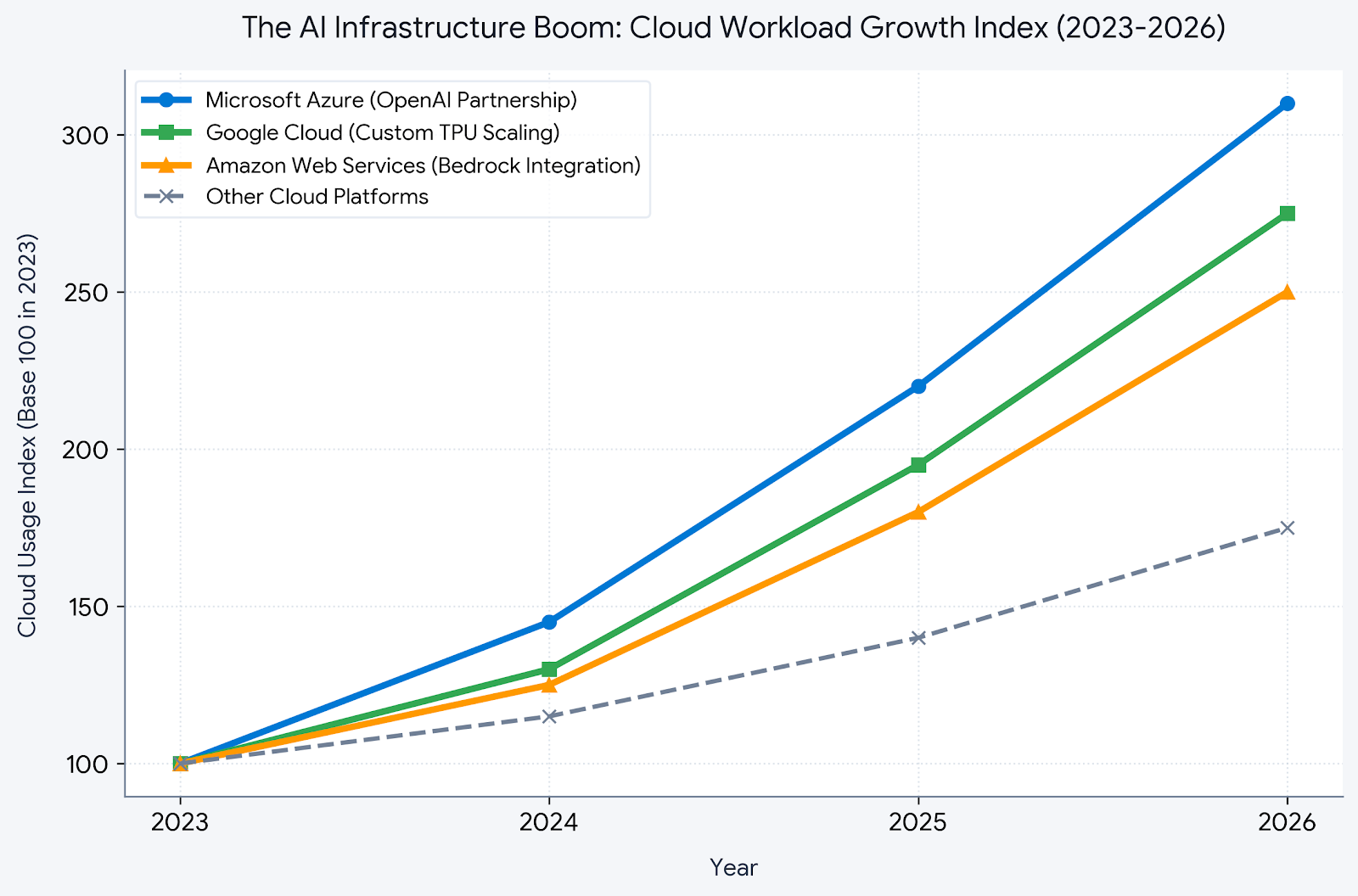
This surge in specific workload consumption has altered the financial trajectories of the dominant cloud platforms, allowing them to monetize the AI wave through distinct operational strategies
Amazon Web Services (AWS)
The Operational Bedrock: AWS leveraged its massive, deeply entrenched market footprint to capture high-volume data ingestion
Microsoft Azure
The Sovereign Early-Mover: Azure executed arguably the most aggressive monetization play via its multi-billion-dollar alliance with OpenAI
Google Cloud Platform (GCP)
The Custom Silicon Safe-Haven: Google Cloud uniquely insulated itself from the industry-wide GPU shortage by relying heavily on its proprietary Tensor Processing Units (TPUs)
Structural Market Realities
- The implications of this infrastructure transformation extend beyond mere quarterly earnings reports
. Market data indicates that AI workloads represent approximately 19% of total global cloud expenditure, fundamentally changing how enterprise corporate budgets are allocated .
- Furthermore, this trend has forced hyper-scalers into an intense capital expenditure (CapEx) race, forcing them to reinvest billions of dollars into data center transformations, liquid cooling networks, and customized microprocessors
. Cloud providers are no longer just passive landlords renting out virtual storage units; they have effectively transformed into the highly specialized, active cognitive engines of the global economy .
Conclusion:
The relationship between Artificial Intelligence and cloud computing has evolved into a powerful, symbiotic cycle
_
Ismail Shaikh
Recommended resources
Manual references stay pinned first, and AI adds extra official or trusted links matched to the lesson topic.
Related reading
These pages connect closely to the current lesson and help learners keep moving through the same subject cluster.
- AI Troubleshooting
Learn how to diagnose model behavior, data quality, integration failures, and performance issues in AI-driven systems.
- Cloud and SaaS Troubleshooting
Learn the support patterns behind permissions, tenant configuration, service health, and cloud-hosted application issues.
- AI and LLM Troubleshooting
Understand why AI-enabled systems fail differently and how to troubleshoot prompts, retrieval, tools, quality, latency, and safety.
- Application and User Support
Diagnose software, browser, email, and access issues while separating user-specific failures from system or server-side causes.